LMS
LMS- Join the Best Machine Learning Training Institute to get skilled in ML tools and methods.
- Our Machine Learning Course Covers Core Fundamentals and Advanced Algorithms.
- Study with Flexible Batches: Weekdays, Weekends, or Accelerated Programs.
- Gain Hands-on Experience by Working on Real-time ML Projects Guided by Industry Experts.
- Earn a Recognized Machine Learning Certification With Placement Support.
- Receive Expert Guidance in Crafting a Professional Resume and in Interviews.
Join Our 100% Job Guaranteed
Best Machine Learning Training
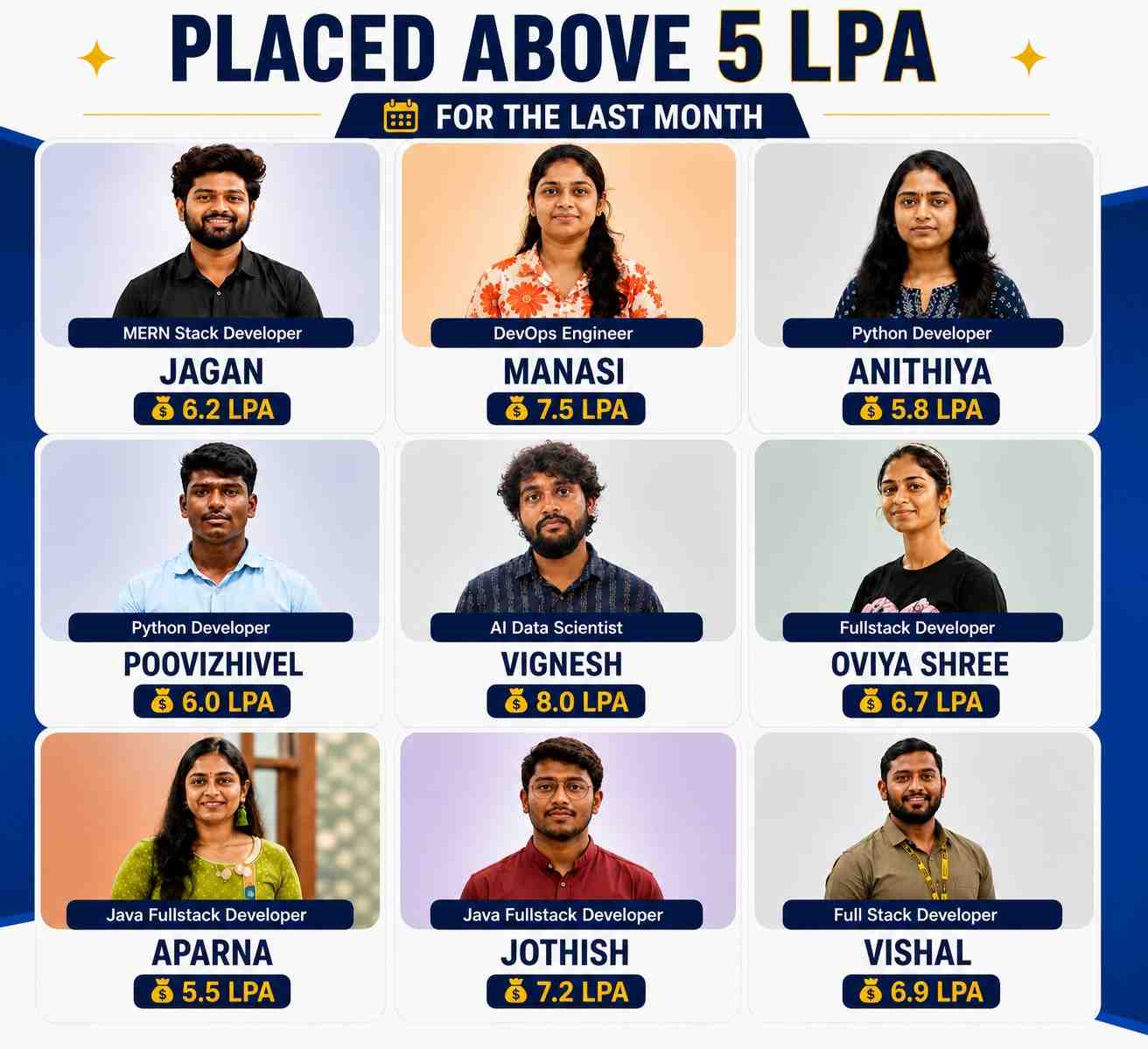
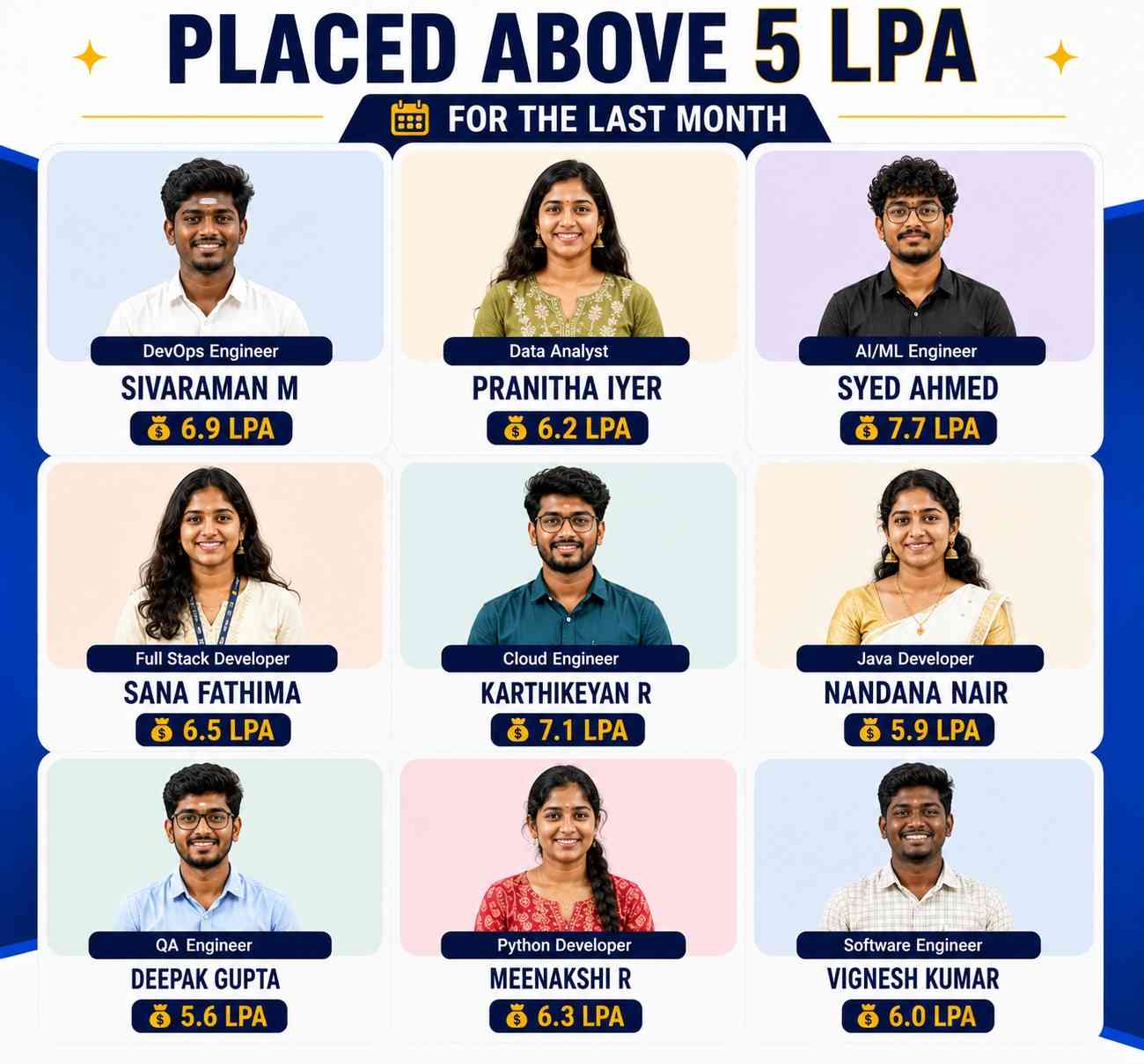
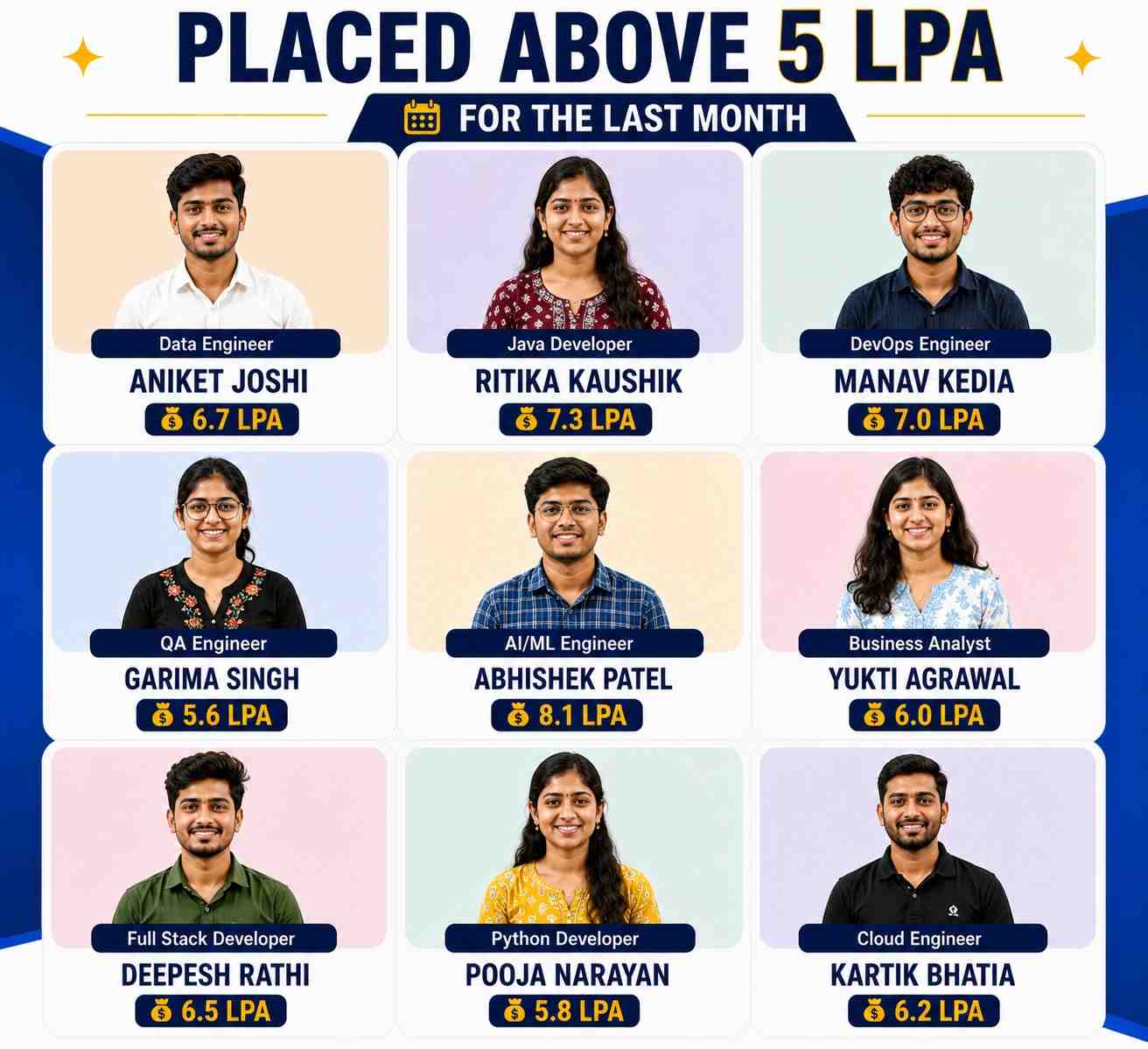
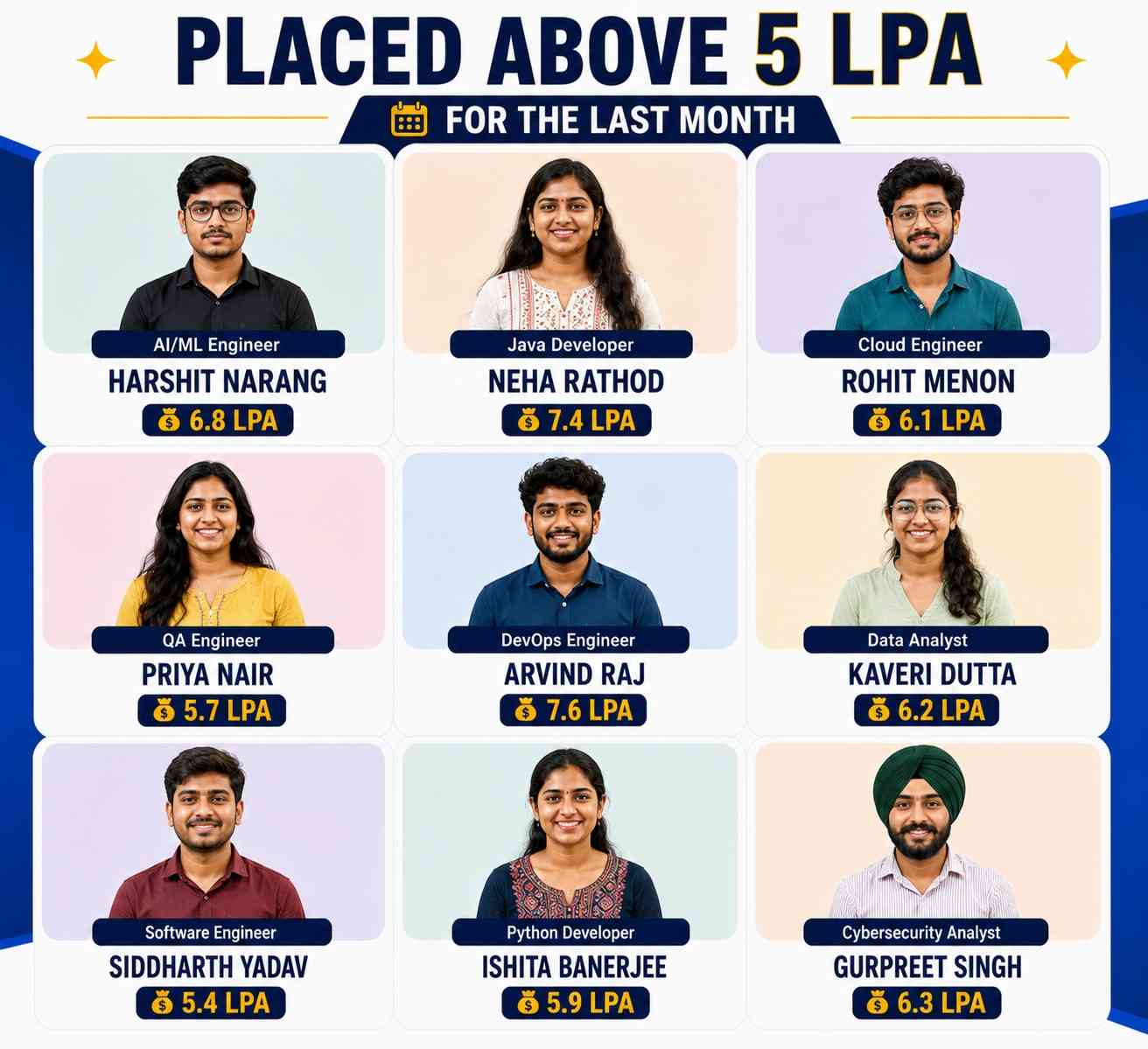
Explore Active Opportunities on
 by ACTE
Live
1000+
Jobs and Internships
Quality Training With Affordable Fees!
 Fees Starts From
INR
36,000
INR 16,500

10653+
(Placed)
5422+
(Placed)
6321+
(Placed)
4345+
(Placed)We Offer Both Online and Classroom Training in Chennai & Bangalore.
Our Hiring Partners

Overview of Machine Learning Course
Our Machine Learning Course is made to make it simple for newcomers to understand the foundational and more complex ideas of machine learning. You can choose to learn through our Machine Learning Course in Online and Classroom formats, whichever suits your schedule. The course offers hands-on experience with real-time projects to help you gain practical skills. On completing the program, you will receive a Machine Learning Certification recognized by industry professionals. A dedicated 30-day placement preparation program is included, which focuses on resume building, mock interviews and soft skills training to boost your confidence. We also provide support for Machine Learning Placement, helping you start your career successfully.
What You Will Learn From Machine Learning Certification Course
- Gain a strong foundation in Machine Learning Training concepts, including Python programming, data analysis with NumPy and model building using Scikit-learn.
- Understand how to preprocess and manipulate data effectively, perform exploratory data analysis and visualize insights in a practical manner.
- Work on real-world datasets and projects to apply Machine Learning techniques in solving industry-relevant problems.
- Learn essential algorithms such as regression, classification, clustering and model evaluation for accurate predictions.
- Progress from beginner to advanced skills, mastering techniques such as feature engineering, hyperparameter tuning and automation for efficient ML workflows.
- Receive a globally recognized Machine Learning Certification to boost your career opportunities and gain confidence for Machine Learning Placement.
Additional Info
Course Highlights
- Kickstart Your Machine Learning Journey: Learn Python, NumPy, Scikit-learn, data preprocessing, model building and predictive analytics.
- Get dedicated job support with placement assistance from top companies hiring skilled Machine Learning professionals.
- Join over 11,000 students trained and successfully placed through our strong network of 350+ hiring partners.
- Learn from expert instructors with more than 10 years of industry experience in Machine Learning and data science.
- Enjoy beginner-friendly lessons, hands-on projects and full career guidance to support your learning every step of the way.
- Benefit from affordable fees, flexible batch schedules and 100% placement support, ideal for freshers and career changers.
Benefits You Gain from an Machine Learning Course
- Automation – Machine Learning helps perform repetitive tasks automatically without human intervention. By learning from data, it can make decisions on its own, which saves time and reduces errors. Numerous sectors, including manufacturing, finance and healthcare, employ machine learning (ML) to increase productivity and concentrate human resources on more crucial tasks. Automation allows businesses to handle large workloads quickly and accurately.
- Smart Decisions – Large volumes of data can be analyzed via machine learning to uncover insightful patterns. This aids companies in making quicker and more informed decisions, including forecasting trends or comprehending consumer behavior. With ML companies can plan better and reduce guesswork, leading to more reliable results. It essentially turns raw data into actionable knowledge for decision-making.
- Personalization – Machine Learning enables personalized experiences for users by understanding their preferences and behavior. It can recommend products, services or content that is most relevant to each individual. Businesses benefit by targeting the right audience at the right time which increases customer engagement and satisfaction. Personalization helps create stronger connections with users and improves loyalty.
- Cost Saving – Machine Learning helps companies reduce operational costs by optimizing processes and resources. It can identify areas where time, materials or effort are being wasted and suggest improvements. Automation also reduces the need for manual work which lowers expenses. Overall ML allows businesses to save money while maintaining quality and efficiency in their operations.
- Prediction – Based on past data, such as sales patterns, consumer demand or probable machine faults, machine learning may forecast future occurrences. These predictive insights help companies prepare in advance and make informed decisions. Businesses can reduce risks, avoid problems and plan more effectively. Prediction using ML makes operations smarter, safer and more reliable.
Popular Tools Taught in Machine Learning Training
- Python – Python's ease of use and ease of learning make it one of the most widely used tools for machine learning. It has many libraries and frameworks that make building ML models simple. Python allows beginners and experts to write code efficiently and test their ideas quickly. It is widely used in industries for data analysis, AI and ML projects.
- Scikit-learn – Scikit-learn is a Python library used for building Machine Learning models. It provides tools for classification, regression, clustering and data preprocessing. Beginners can easily implement ML algorithms without writing complex code. Scikit-learn is perfect for both learning and real-world projects.
- NumPy – NumPy is library in Python used for numerical and mathematical operations. It helps handle large datasets and perform calculations quickly, which is essential in Machine Learning. With NumPy data can be organized in arrays and matrices for easy processing. It is a basic yet powerful tool for data manipulation and analysis.
- TensorFlow – TensorFlow is an open-source platform for building advanced Machine Learning and Deep Learning models. It allows creating neural networks and working with large datasets efficiently. TensorFlow supports both beginners and experts with pre-built models and easy integration. It is widely used in AI applications like image recognition and natural language processing.
- Pandas – Pandas is a Python package for analyzing and manipulating data. It helps clean, organize and structure data before using it in Machine Learning models. Pandas makes working with datasets easier with its tables and functions. It is an essential tool for preparing data and gaining insights before training ML algorithms.
Top Frameworks Every Machine Learning Developer Should Know
- TensorFlow – A well-liked open-source framework for creating models for deep learning and machine learning is called TensorFlow. It allows you to create neural networks and handle large datasets efficiently. Beginners and experts can use it with pre-built models and tools to simplify development. AI applications including image identification, natural language processing and predictive analytics frequently employ TensorFlow.
- PyTorch – PyTorch is a user friendly, open-source framework for creating machine learning and deep learning models. It facilitates dynamic computation and offers flexibility for experimenting with neural networks. For academic and research projects as well as practical uses, PyTorch is the recommended choice. It is powerful and beginner friendly due to its simplicity and robust community support.
- Scikit-learn – Scikit-learn is a Python library and framework for Machine Learning. It provides tools for classification, regression, clustering and data preprocessing. Beginners can quickly implement ML algorithms without complex coding. Scikit-learn is ideal for learning ML concepts and building small to medium-scale projects.
- Keras – Keras is a high-level framework built on top of TensorFlow that makes building neural networks easier. It is beginner friendly and allows fast prototyping of ML models with simple code. Keras is widely used for image, text and speech recognition projects. Its integration with TensorFlow provides powerful tools for both research and production.
- Apache Spark MLlib – MLlib is the Machine Learning library of Apache Spark, designed for big data processing. It provides scalable tools for classification, regression, clustering and collaborative filtering. Spark MLlib can handle huge datasets faster than traditional frameworks. It is widely used in industries that need real-time analytics and large-scale Machine Learning applications.
Essential Skills You’ll Learn in a Machine Learning Course
- Data Analysis – Taking a machine learning course will educate you how to analyze and comprehend data correctly. This skill helps to identify patterns, trends and insights from raw datasets. Understanding data is essential for building accurate ML models. Strong data analysis skills allow you to make better decisions based on information rather than guesswork.
- Python Programming – Python is a fundamental skill in machine learning since its extensively used to code ML algorithms. Writing scripts, working with data and effectively implementing models are all skills you will acquire. Python's simplicity allows even beginners to understand complex topics with ease. Learning Python gives the confidence to create practical machine learning applications.
- Machine Learning Algorithms – You will gain expertise in using various ML algorithms like regression, classification, clustering and decision trees. This skill allows you to solve different types of problems using the right approach. Learning algorithms also helps you understand how models learn from data. It is a key skill to design and optimize accurate ML solutions.
- Model Evaluation and Optimization – A Machine Learning course teaches you to evaluate and improve your models. You learn techniques such as cross validation, accuracy metrics and hyperparameter tuning. This skill make sure your models perform well on real-world data. Optimizing models helps achieve better predictions and more reliable outcomes.
- Data Visualization The ability to clearly and visually communicate data and model findings will be taught to you. Charts and graphs can be created from complex data with the aid of programs like Matplotlib and Seaborn. Data visualization makes trends and patterns easier to understand. Effective data-driven decision making and insight sharing depend on this ability.
Key Roles and Responsibilities of Machine Learning Profession
- Machine Learning Engineer – ML models are created and designed by a machine learning engineer to address business issues. They choose methods, train models for predictions and work with big datasets. Moreover they optimize and implement models in practical applications. The accuracy and efficiency of ML systems are guaranteed by their efforts.
- Data Scientist – Data Scientists collect, analyze and interpret complex datasets to gain insights. They use Machine Learning techniques to identify trends, patterns and opportunities. Their responsibility includes creating predictive models to support decision making. They bridge gap between raw data and actionable business strategies.
- AI/ML Research Scientist – The main goals of AI/ML research scientists are to create new algorithms and enhance current ones. They experiment with cutting-edge methods to improve the efficiency and accuracy of the model. They also contribute to creative AI solutions and publish research findings.
- Data Analyst – Data Analysts work with data to extract meaningful insights and support business decisions. They clean, organize and visualize data using ML tools and techniques. They often create reports and dashboards to communicate findings clearly. Their role helps organizations understand patterns and improve strategies.
- Business Intelligence (BI) Developer – BI Developers use Machine Learning to transform raw data into actionable business insights. They design dashboards, reports and analytical tools for decision makers. They apply predictive analytics to forecast trends and support planning. Their work enables companies to make smarter, data-driven choices.
Why Machine Learning Is the Smart Choice for Freshers
- High Demand for ML Professionals – Numerous businesses, including e-commerce, healthcare and finance, use machine learning. To analyze data and create intelligent systems, businesses are searching for qualified machine learning specialists. For new hires, this opens up a lot of work prospects. You have a good chance of finding work fast if you start a career in machine learning.
- Attractive Salary Packages – ML professionals are highly valued due to their specialized skills. Even freshers can earn competitive salaries when they have good knowledge of ML tools and algorithms. As you gain experience salary packages increase significantly. Choosing ML as a career can provide financial stability and growth.
- Diverse Career Opportunities – Numerous career paths, including ML Engineer, Data Scientist, AI Researcher and Data Analyst, are accessible through a machine learning education. Depending on their interests and abilities, freshmen can pursue a variety of career routes. Because of its versatility, machine learning is a fascinating and adaptable job choice. You can work in a variety of fields and industries.
- Continuous Learning and Growth – The discipline of machine learning is always developing with new methods, tools and algorithms. Freshers get opportunities to learn and grow continuously. This keeps the work challenging and interesting. A career in ML encourages personal development and skill enhancement over time.
- Real-World Impact – ML professionals create solutions that improve everyday life, like recommendation systems, self-driving cars and healthcare diagnostics. Freshers can contribute to meaningful projects that have a real-world impact. This makes the career rewarding and fulfilling. Working in ML allows you to make a difference with technology.
Landing Remote Jobs with Machine Learning Skills
- High Demand for Remote ML Roles – Many companies around the world hire Machine Learning professionals to work remotely. Skilled ML experts are needed for data analysis, predictive modeling and AI solutions. Having ML skills increases your chances of landing remote opportunities. This demand allows you to work from anywhere with a good career.
- Work with Global Companies – Machine Learning skills allow you to collaborate with international teams and clients. Remote jobs let you contribute to projects for companies across different countries. This helps you gain global exposure and experience. It is possible to establish a robust professional network while working from home.
- Flexibility in Job Opportunities – Numerous remote positions, such as data scientist, ML engineer or AI analyst, are accessible to those with ML skills. Projects can be selected according to your interests, level of experience and availability. You have more autonomy over your personal life, career and education when you work from home. Because of this, machine learning is a perfect skill for remote work.
- Competitive Salary Packages – Remote ML jobs often offer attractive salaries as companies seek specialized skills. With ML knowledge, even freshers can access well-paid remote positions. Your skills in Python, Scikit-learn and data modeling increase your value. This allows you to earn a good income while working from home.
- Access to Freelance and Contract Work – Proficiency in machine learning allows you to accept remote contract or freelance work. You can work on a variety of projects, developing your portfolio and experience. Working as a freelancer gives you independence and career flexibility. Proficiency in machine learning gives you the confidence to manage a variety of distant tasks.
What to Expect in Your First Machine Learning Job
- Learning and Training – In your first ML job, you will spend time learning company-specific tools, processes and datasets. Even after completing a course, real-world projects teach new skills. Mentors and senior team members guide you to handle tasks effectively. Continuous learning is a key part of starting your ML career.
- Working on Real Datasets – Real-world data, which is frequently complex and untidy, will be used in your work. Your main responsibilities will be cleaning, organizing and evaluating this data. It aids in your comprehension of how ML models function with real-world business data. Gaining practical ML skills requires this experience.
- Collaboration with Teams – Expect to work closely with data scientists, engineers and business teams. Collaboration is important to understand project goals and deliver solutions. You will learn to communicate your findings clearly to non-technical stakeholders. Teamwork helps you gain practical exposure and confidence.
- Applying ML Algorithms – Your first job will involve implementing ML algorithms like regression, classification and clustering. You will learn to select the right algorithm for different problems. Testing, evaluating and improving models is part of your day-to-day tasks. This hands-on experience strengthens your technical skills.
- Learning to Solve Business Problems – Your ML work will focus on solving real business challenges, not just theory. You will see how predictions and insights impact decisions and strategies. Understanding business requirements is key to creating useful ML models. This experience teaches you to think practically and add value to the organization.
Top Companies are Hiring for Machine Learning Professionals
- Google – Google leads the world in AI and technology innovation. They hire Machine Learning professionals to work on projects like search algorithms, Google Assistant and autonomous systems. Employees get to work with huge datasets and cutting-edge ML technologies. Google provides great learning opportunities and career growth in AI and ML.
- Amazon – Amazon uses Machine Learning extensively for product recommendations, logistics and Alexa. ML professionals at Amazon work on real-time analytics and predictive modeling. The company offers exposure to large-scale ML systems and advanced tools. Working here helps you gain practical experience and industry-recognized skills.
- Microsoft – Microsoft hires machine learning specialists to provide AI solutions, cloud services and intelligent apps. Workers work on computer vision, speech recognition and Azure ML. With access to cutting-edge frameworks, the organization promotes learning and creativity. Microsoft provides excellent chances for professional advancement in AI and machine learning.
- IBM – IBM focuses on AI and Machine Learning solutions for businesses worldwide. ML professionals here work on data analysis, predictive models and automation projects. The company provides training on IBM Watson and other advanced ML tools. IBM gives you exposure to real-world industry problems and professional development.
- Meta – Meta uses Machine Learning for social media feeds, recommendations and content moderation. ML professionals work on large datasets and advanced AI algorithms. Employees get opportunities to develop innovative solutions impacting millions of users. Working at Meta helps you enhance technical skills and career prospects in AI.
Show More
Tools Covered in Machine Learning Certification Training







Upcoming Batches For Classroom and Online
Weekdays
21 - Sep - 2026
08:00 AM & 10:00 AM
Weekdays
23 - Sep- 2026
08:00 AM & 10:00 AM
Weekends
26 - Sep - 2026
(10:00 AM - 01:30 PM)
Weekends
27 - Sep - 2026
(09:00 AM - 02:00 PM)
Can't find a batch you were looking for?
What’s included ?

📊 Free Aptitude and Technical Skills Training
- Learn basic maths and logical thinking to solve problems easily.
- Understand simple coding and technical concepts step by step.
- Get ready for exams and interviews with regular practice.

🛠️ Hands-On Projects
- Work on real-time projects to apply what you learn.
- Build mini apps and tools daily to enhance your coding skills.
- Gain practical experience just like in real jobs.

🧠 Launch Your Career in Top MNC Companies
- Master technical and HR interview rounds.
- Gain confidence with expert mock interview practice.
- Improve your chances of getting hired faster.

🎯 Interview Preparation For Freshers
- Practice company-based interview questions.
- Take online assessment tests to crack interviews
- Practice confidently with real-world interview and project-based questions.

🧪 LMS Self Learning Platform
- Explore expert trainer videos and documents to boost your learning.
- Study anytime with on-demand videos and detailed documents.
- Top MNC interview questions & self coding practice.
Machine Learning Course Syllabus
- 🏫 Classroom Training
- 💻 Online Training
- 🚫 No Pre Request (Any Vertical)
- 🏭 Industrial Expert
Our Machine Learning Course in Online and Classroom offers a complete syllabus for beginners and aspiring data enthusiasts. You’ll learn core Machine Learning concepts, Python programming, data preprocessing and popular libraries like Scikit-learn and NumPy. Gain practical experience through Machine Learning Internships and real time projects. The course also covers model evaluation, predictive analytics and data visualization. Plus, dedicated placement support helps with resume building and interview preparation, making your ML Course journey complete.
- Introduction to ML – Discover the principles of Python, data preprocessing, supervised and unsupervised learning.
- Advanced Concepts and Libraries – Explore feature engineering, model optimization and popular libraries.
- Hands-On Projects – Work on real-time projects like predictive models, recommendation systems and classification tasks.
- Tools & Deployment – Deploy ML models on cloud and servers using tools like Jupyter, Git and Docker.
Introduction to Machine Learning
Data Analysis and Visualization
Python for Machine Learning
Supervised Learning Techniques
Unsupervised Learning Techniques
Advanced Machine Learning Concepts
Machine Learning Tools and Libraries
Learn the fundamentals and basics of Machine Learning:
- Supervised Learning – Understand regression and classification techniques
- Unsupervised Learning – Explore clustering and association methods
- Python Basics – Learn Python syntax, variables and data types for ML
- Data Preprocessing – Handle missing values, normalization and data cleaning
- NumPy & Pandas – Use these libraries for efficient data manipulation
- ML Workflow – Understand the step by step process of building ML models
Learn to analyze and visualize data for better insights:
- Matplotlib and Seaborn – Create charts, plots and graphs for data
- Exploratory Data Analysis (EDA) – Detect patterns and trends in datasets
- Descriptive Statistics – Calculate mean, median, variance and correlations
- Data Cleaning Techniques – Handle missing, duplicate and inconsistent data
- Feature Selection – Identify important features for better model performance
- Data Interpretation – Draw meaningful insights from visualized data
Learn Python programming skills essential for ML:
- Python Libraries – Use NumPy, Pandas and Matplotlib for ML tasks
- Functions and Loops – Automate repetitive tasks in data processing
- Object-Oriented Programming – Organize code with classes and objects
- File Handling – Work with CSV, Excel and JSON data
- Data Structures – Use lists, dictionaries and arrays efficiently
- Exception Handling – Manage errors and improve code reliability
Learn algorithms used for prediction with labeled data:
- Linear Regression – Predict continuous values using regression
- Logistic Regression – Solve classification problems with binary outcomes
- Decision Trees and Random Forest – Build tree based predictive models
- Support Vector Machines (SVM) – Classify data with optimal hyperplanes
- K-Nearest Neighbors (KNN) – Predict using similarity of data points
- Evaluation Metrics – Use accuracy, precision, recall and F1-score
Learn algorithms for discovering patterns in unlabeled data:
- K-Means Clustering – Group data into clusters based on similarity
- Hierarchical Clustering – Build tree-like data clusters
- Principal Component Analysis (PCA) – Reduce dimensionality of datasets
- Association Rule Learning – Discover relationships in datasets
- Anomaly Detection – Identify outliers in data
- Data Transformation – Scale and normalize data for better results
Learn advanced techniques to improve ML models:
- Feature Engineering – Create meaningful features from raw data
- Hyperparameter Tuning – Optimize model performance
- Ensemble Techniques – Combine models using bagging and boosting
- Regularization – Prevent overfitting with L1 and L2 techniques
- Cross-Validation – Evaluate models reliably using k-fold methods
- Model Interpretation – Understand predictions and model behavior
Learn essential tools and libraries for practical ML implementation:
- Scikit-learn – Build and train ML models efficiently
- NumPy and Pandas – Handle numerical and tabular data
- Matplotlib and Seaborn – Visualize data and results
- Jupyter Notebook – Write, test and document ML code interactively
- Google Colab – Run ML experiments on the cloud
- Data Handling Techniques – Manage datasets for analysis and modeling
🎁 Free Addon Programs
Aptitude, Spoken English.
🎯 Our Placement Activities
Daily Task, Soft Skills, Projects, Group Discussions, Resume Preparation, Mock Interview.
Gain Practical Experience in Machine Learning Projects
Project 1
Predictive Model
Build a model to predict sales, stock prices or customer behavior using historical data and Machine Learning algorithms like regression and decision trees.
Project 2
Recommendation System
Make a personalized recommendation engine for e-commerce or streaming platforms using collaborative filtering and content-based filtering techniques.
Project 3
Image Classifier
Develop an image classification system to recognize objects, animals or handwritten digits using ML and Python libraries like Scikit-learn and OpenCV.
Project 4
Customer Segmentation
Create a clustering model to segment customers based on purchasing behavior, demographics and preferences for targeted marketing strategies.
Project 5
Sentiment Analysis Tool
Make a tool that analyzes social media posts or reviews to determine positive, negative or neutral sentiment using NLP and Machine Learning techniques.
Who Should Take a Machine Learning Certification Course
IT Professionals
Non-IT Career Switchers
Fresh Graduates
Working Professionals
Diploma Holders
Professionals from Other Fields
Salary Hike
Graduates with Less Than 60%
Show More
Job Roles For Machine Learning Certification Training
Machine Learning Engineer
Data Scientist
AI/ML Research Scientist
Deep Learning Engineer
NLP Engineer
Computer Vision Engineer
AI Software Developer
ML Ops Engineer
Show More
ML Training Offered Classroom (Chennai & Bangalore) and Online.
No Coding
8 Lakhs+ CTC
No Work Pressure
WFH Jobs (Remote)
Why Machine Learning is the Ultimate Career Choice
High Demand
Companies prefer multi-skilled professionals can handle entire project cycles.
Global Opportunities
Open doors to remote and international job markets.
High Salary
Enjoy competitive salaries and rapid career advancement.
Flexible Career Path
Explore roles such as developer, architect, freelancer, or entrepreneur.
Future-Proof Career
Stay relevant with skills that are consistently in demand in the evolving tech landscape.
Versatility Across Industries
Work in various domains like e-commerce, healthcare, finance, and more.
Career Support


Placement Assistance

Exclusive access to ACTE Job portal

Mock Interview Preparation

1 on 1 Career Mentoring Sessions

Career Oriented Sessions

Resume & LinkedIn Profile Building
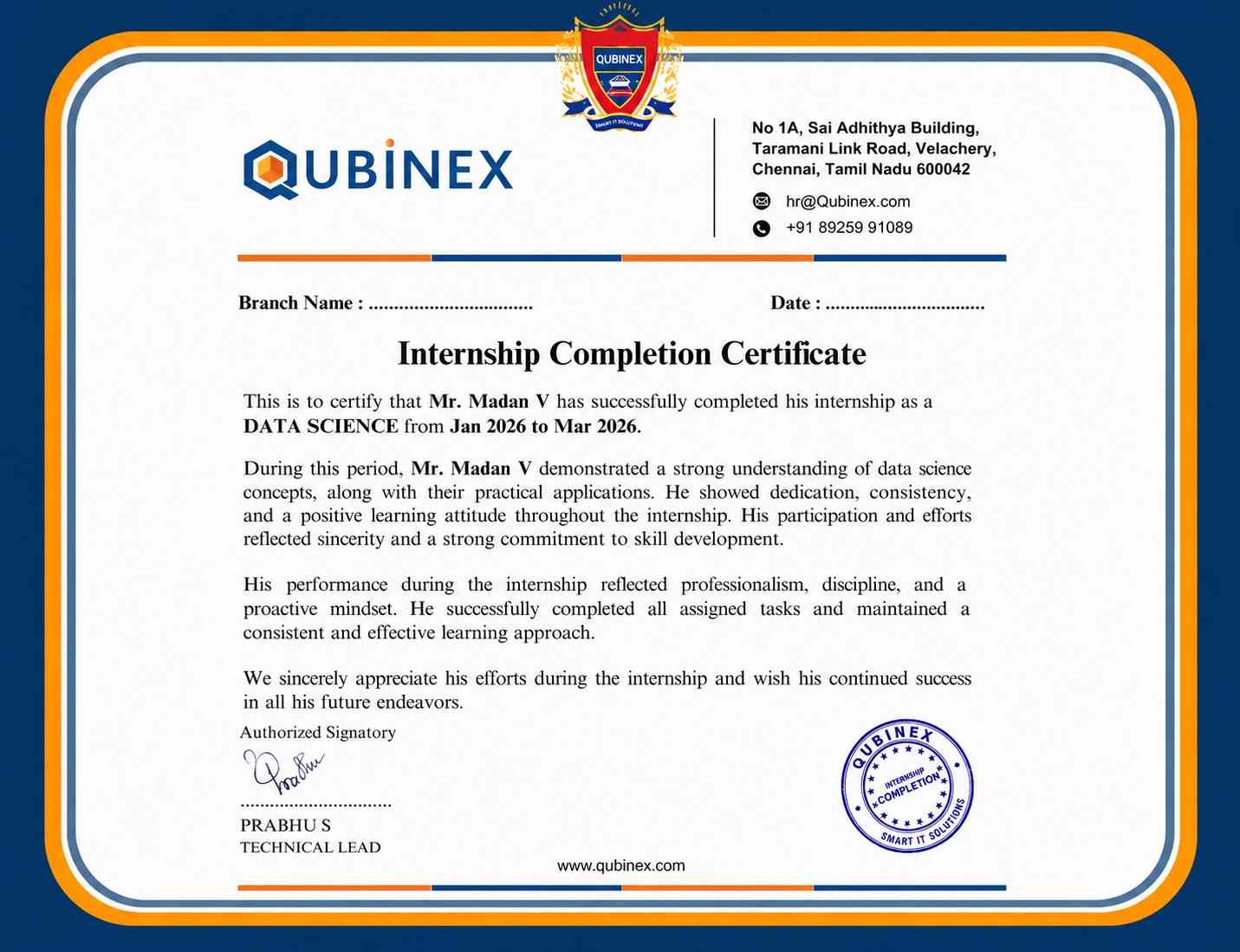
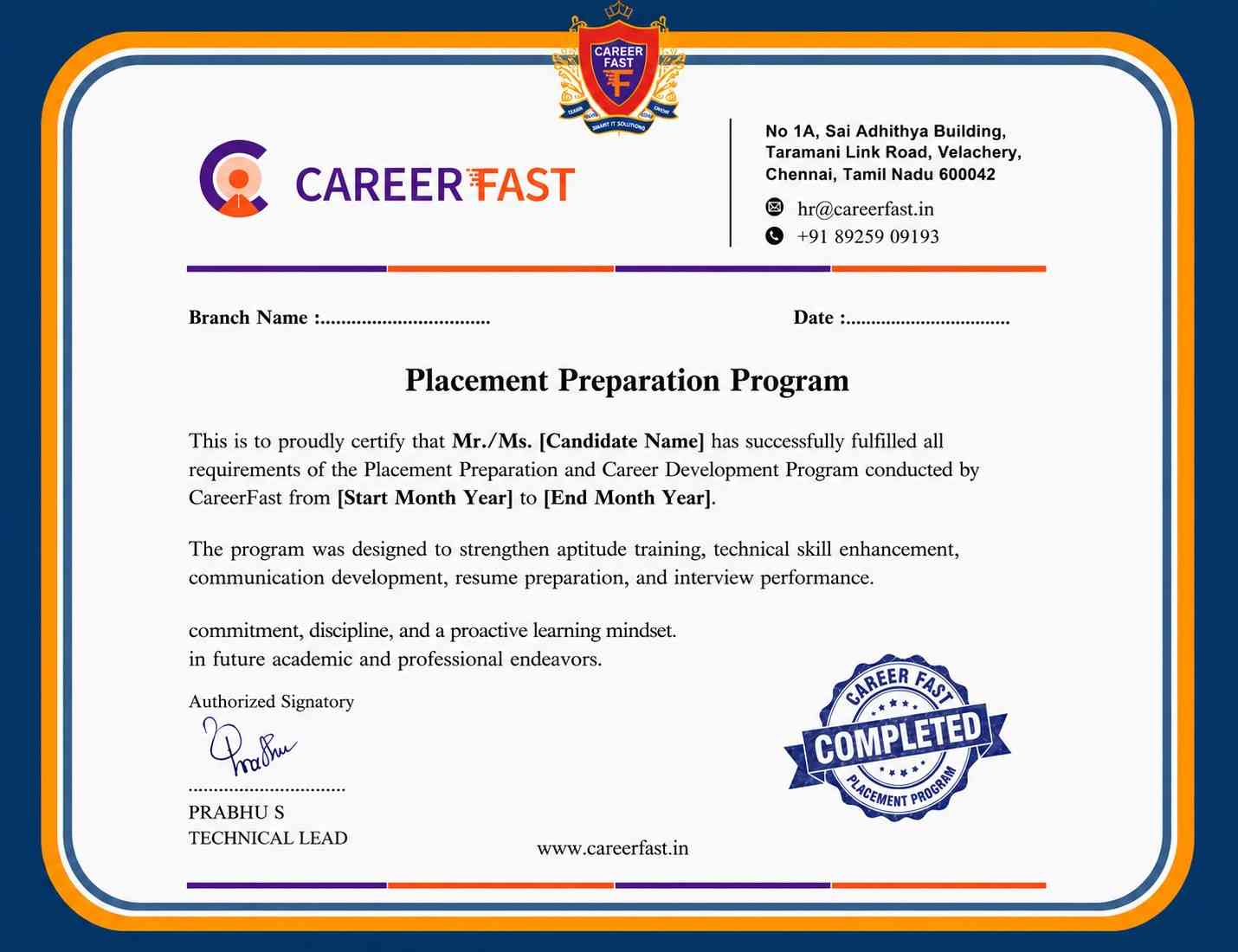
Get Advanced Machine Learning Certification
You'll receive a certificate proving your industry readiness.Just complete your projects and pass the pre-placement assessment.This certification validates your skills and prepares you for real-world roles.
📜 Industry-Recognized Certification
Earn official, shareable certifications recognized by top companies — a powerful proof of your job-ready skills.
🚀 Get Discovered by Top Employers
Let recruiters come to you with your verified profile — focus on learning while we connect you to real opportunities.
💼 Real-World Project Experience
Work on real-world projects to sharpen your skills and build a portfolio that impresses employers instantly.

Lowest Machine Learning Course Fees
Affordable, Quality Training for Freshers to Launch IT Careers & Land Top Placements.
Machine Learning Course FAQs
1. Who should consider taking a Machine Learning Course?
Anyone interested in data, AI or analytics can join. The course starts with Python basics, data handling and ML algorithms and gradually teaches you how to build and evaluate models confidently.
2. How does Machine Learning knowledge help in a career?
Learning ML opens doors to roles in AI, data analytics and predictive modeling. You gain practical experience with datasets, model building and evaluation techniques, preparing you for real-world projects.
3. What schedule options are available for this course?
Batches are offered on weekdays, weekends, evenings and fast-track options. This flexibility lets learners balance their studies with work, college or other commitments.
4. In what ways can students seek guidance during the course?
Mentors are available through live sessions, chats and email. Students can ask questions, clarify doubts and receive detailed feedback to ensure smooth learning and skill mastery.
5. Why begin with Machine Learning fundamentals first?
Starting with basics like Python, data preprocessing and core ML concepts creates a strong foundation. It makes learning advanced topics such as neural networks and feature engineering easier and more practical.
1. Who is eligible to enroll in the Machine Learning Course?
Anyone with basic computer and programming knowledge, including students, freshers and working professionals can join. No prior ML or AI experience is required.
2. Is this course suitable for someone with no technical background?
Yes. Concepts are explained step-by-step, starting from scratch. Beginners can easily understand Python, data handling and ML algorithms through hands-on exercises.
3. Can graduates from non-technical fields benefit from this course?
Absolutely. ML skills are in demand across industries. Non-technical learners can gain practical experience and pursue entry-level roles in AI, analytics or data science.
4. How does the course help professionals returning to the workforce?
The program refreshes technical skills and introduces modern ML tools and libraries. Returning professionals can update their knowledge and explore opportunities in AI, analytics and data-driven roles.
5. Is prior coding experience mandatory?
No. The course is beginner-friendly. With guided instruction, exercises and mentor support, students can learn ML without any prior programming knowledge.
1. Who is eligible for placement support?
We ensure placement support for all students. Everyone receives guidance in resume building, interview preparation, and career planning, while active participation in sessions and exercises helps maximize success.
2. How does Machine Learning Course boost career growth?
Hands-on Python projects, ML model building and data analysis exercises help learners develop practical skills. This prepares freshers for roles in AI, data science and analytics.
3. Who guides students in career planning?
Experienced mentors provide guidance on resume writing, skill assessment and interview preparation. They help learners confidently present their ML skills to potential employers.
4. Are internships part of the Machine Learning Course?
Yes. Students can join ML or data science internships to gain practical experience with real datasets model development and evaluation techniques.
5. Do internships come with stipends?
Many companies offer stipends to interns providing financial support while gaining hands on experience in ML and data analysis. Stipends vary depending on the organization.
1. What certificates will I receive after completing the Machine Learning course?
Students earn certifications such as:
- Machine Learning Fundamentals
- Python for Machine Learning
- Advanced Machine Learning Specialist
2. How does Machine Learning Certification help in a professional setting?
Completing the Machine Learning Training certification demonstrates proficiency in Python, data preprocessing and implementing ML models. It validates your skills for AI and data science projects, boosts professional credibility and positions you as a qualified candidate capable of contributing effectively to real world machine learning tasks.
3. How long does it typically take to complete the Machine Learning course?
Learners usually complete the Machine Learning Training in 2–4 months, depending on their pace and engagement. The course includes hands-on exercises, projects and practical applications that prepare students thoroughly for certification exams and real-world machine learning challenges.
4. What are the advantages of getting certified in Machine Learning Training?
- Improves employability in AI and analytics
- Confirms expertise in Python and ML tools
- Boosts confidence in building ML solutions
- Strengthens professional resume and credibility
5. How can learners prepare for Machine Learning Certification?
- Practice Python programming regularly
- Experiment with different ML algorithms
- Work on real-world datasets
- Review mentor feedback to reinforce understanding
1. What payment options are available for the Machine Learning Course?
Payment options include installment plans, online banking, UPI and credit/debit cards. Its convenient to choose based on your needs when you have flexible options.
2. Does the course fee include placement assistance?
Yes. The fee usually covers resume support, interview preparation and placement guidance for complete career support.
3. Why do fees vary between institutes?
Costs differ based on syllabus depth, access to tools and hands on training. Programs with extensive practical exposure and updated resources generally charge more.
4. Is there a difference in fee between online and classroom training?
Generally, fees are similar for both formats, make sure equal access to quality training, tools and mentor support regardless of the learning mode.
100% Job Guarantee
Global Quality Training At The Lowest Fees & Expert Trainer
Available in: